Greenville County Warrant Search
This guide explains how warrants are issued and tracked in Greenville County, South Carolina, which agencies handle them, and the safe steps a person can take to check for and resolve an outstanding warrant.
How Warrants Work in Greenville County
A warrant is a written order signed by a judge or magistrate that authorizes law enforcement to take a specific action, most commonly to arrest a named person or to search a location. In Greenville County, South Carolina, warrants are generated through several different court and law enforcement channels, and no single public list captures every one. Understanding which agency issued a warrant is the first step toward checking on it or resolving it.
An outstanding warrant does not mean a person has been convicted of anything. A warrant is part of the early stage of a criminal or court process, and every person named in one is presumed innocent unless and until a court decides otherwise. This page is informational only and is not legal advice.
Types of Warrants and Who Issues Them
Warrants in the county generally fall into a few categories, each tied to a different court or office:
- Arrest warrants — issued when a magistrate or judge finds probable cause that a person committed an offense. These may originate from charges investigated by the Greenville County Sheriff's Office or a municipal police department.
- Bench warrants — issued by a judge when someone fails to appear for a scheduled court date or does not comply with a court order.
- Search warrants — authorize a search of a specific place; these are handled within the investigating agency and the issuing court.
Serious criminal matters in Greenville County are handled through the Court of General Sessions, while records for both the Court of Common Pleas and General Sessions are maintained by the Greenville County Clerk of Court. Lower-level and preliminary matters commonly move through magistrate and municipal courts. Because different courts and agencies are involved, you may need to check more than one source.
Which Agencies Track and Serve Warrants
Several offices play a role in warrants for the county:
- Greenville County Sheriff's Office — the primary law enforcement agency for unincorporated areas and the operator of the Greenville County Detention Center, where individuals are booked after an arrest.
- Municipal police departments — cities within the county investigate offenses in their jurisdictions and forward charges to the appropriate court.
- Magistrate and municipal courts — issue and hold many arrest and bench warrants at the local level.
- Greenville County Clerk of Court — maintains the records for the Court of Common Pleas and General Sessions.
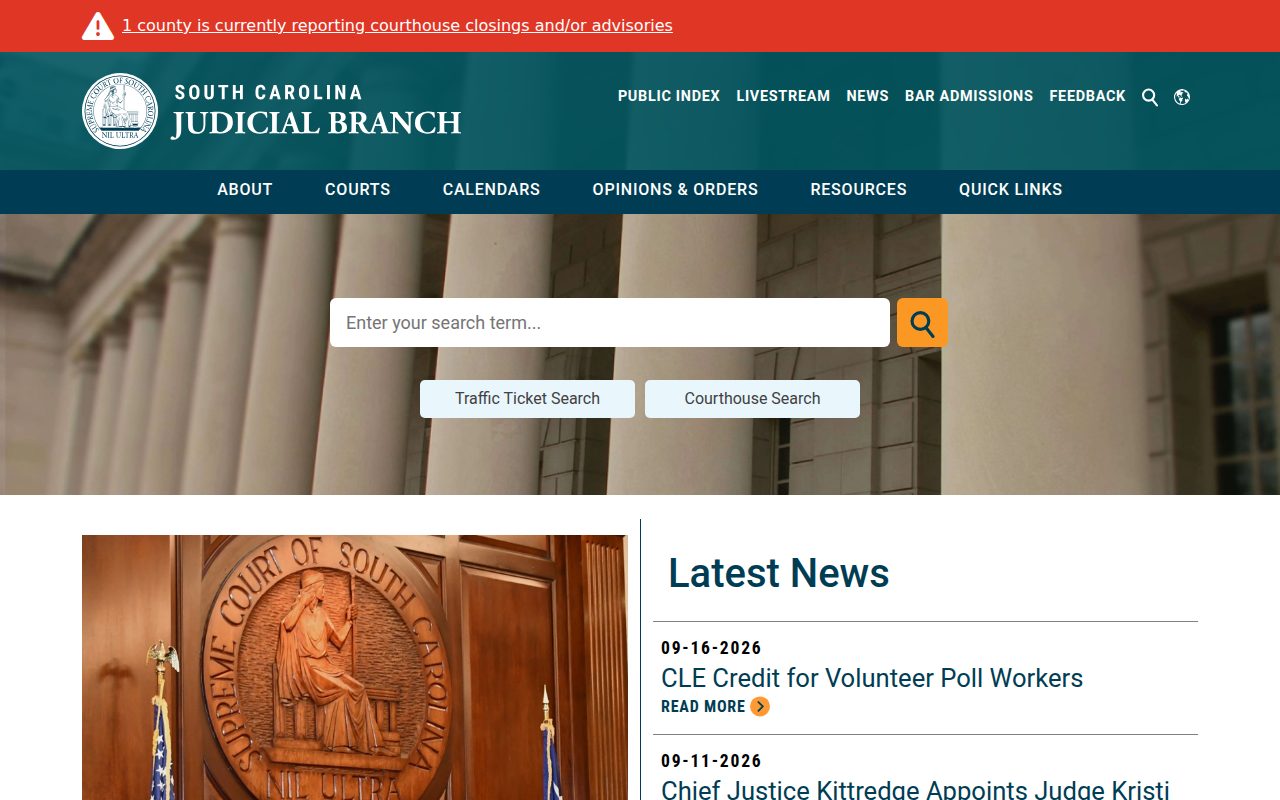
The South Carolina Judicial Branch provides a statewide public index that lets you search court case information across the state, which can help you locate an associated case even when a warrant list itself is not posted online.
How to Check Whether You Have a Warrant
There is no single guaranteed way to confirm a warrant, so it is wise to check multiple sources and confirm any result directly with the issuing agency. Consider these steps:
- Search the statewide court index. Use the South Carolina Judicial Branch public index to look for open cases or scheduled hearings tied to your name.
- Contact the Greenville County Sheriff's Office. Ask whether the agency can confirm an active warrant. Phone numbers, hours, and the specific procedure should be confirmed directly with the office, since this guide cannot verify those details.
- Check with the relevant court. If your matter involves a missed court date, contact the magistrate, municipal, or General Sessions court where your case is pending.
- Consult an attorney. A licensed South Carolina attorney can often verify a warrant on your behalf and advise you before you take any action.
Be aware that inquiring in person at a law enforcement office could result in arrest if an active warrant exists. Many people speak with an attorney first for this reason.
Safe Steps to Resolve a Warrant
If you learn there is a warrant for you, resolving it promptly is usually better than waiting, but how you do so matters. General options include:
- Speak with an attorney first. An attorney can explain the charge, whether bond is likely, and how to surrender in an orderly way.
- Arrange a walk-through or surrender. In some situations, arrangements can be made to appear voluntarily rather than being arrested unexpectedly. Confirm the correct process with the issuing court or the Sheriff's Office.
- Posting bond. Bond conditions and amounts are set by the court or magistrate. Amounts and procedures must be confirmed with the court; this page cannot state any specific figure.
Never ignore a warrant in the hope it will disappear. Bench warrants for missed court dates typically remain active until the person appears or the court cancels them.
Frequently Asked Questions
Is there a public online warrant list for Greenville County?
Not every warrant is posted online. Some agencies publish limited lists, but the most reliable approach is to search the South Carolina Judicial Branch public index and confirm directly with the Sheriff's Office or the issuing court.
Does a warrant mean I am guilty?
No. A warrant is an order authorizing arrest or a search based on probable cause. An arrest is not a conviction, and everyone is presumed innocent until a court rules.
Can I check a warrant for someone else?
Court case information in the statewide index is generally public, but warrant confirmation practices vary by agency. Contact the Greenville County Sheriff's Office or the relevant court to confirm what they will disclose.
Should I turn myself in without a lawyer?
That is a personal decision, but many people consult a licensed South Carolina attorney first so they understand the charge, possible bond, and the safest way to surrender. This guide does not provide legal advice.
Official & Public Resources
Greenville County Government
Official Greenville County government portal with links to county departments and services.
https://www.greenvillecounty.org/

South Carolina Judicial Branch
Official website of the South Carolina Judicial Branch, including the statewide public case index.